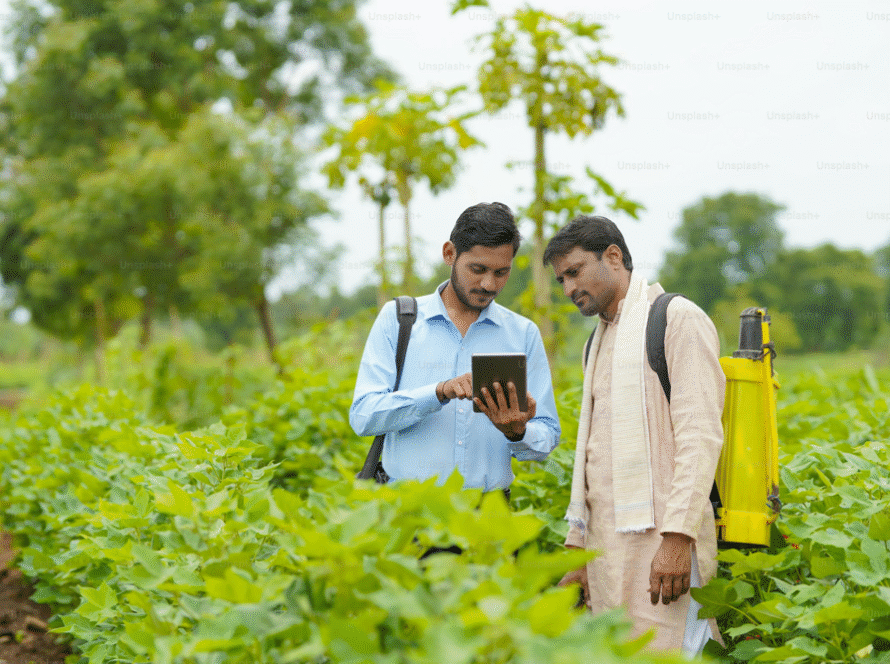
Sustainable farming practices help farmers conserve resources and earn better livelihoods. Techniques like crop rotation, organic manures, and water-efficient methods ensure the land stays productive for generations. For instance, rotating cereals with legumes replenishes soil nitrogen naturally and breaks pest cycles. Planting drought-tolerant grains (like bajra and jowar) and fruit trees (agroforestry) provides both food and income.
Farmers increasingly adopt water-saving methods. Drip irrigation delivers water directly to plant roots, cutting waste and boosting yields in dry areas acfiindia.com. Collecting rainwater in ponds or tanks (rainwater harvesting) gives a reliable backup supply and even recharges groundwater acfiindia.com. Integrated Pest Management (IPM) is another eco-friendly approach: farmers use natural predators, pheromone traps, and pest-resistant crop varieties to minimize chemical pesticides acfiindia.com. Crop rotation and mixed cropping also reduce pests and diseases over time.
These conservation techniques pay off. Healthier soils and water efficiency mean farmers spend less on inputs and face fewer crop failures. Many communities also form cooperatives or Farmer Producer Organizations (FPOs) to gain better market access and share resources (e.g., buying seeds in bulk). For example, groups that bundle grain sales to traders like Dhara can negotiate higher prices and get faster payments.
At the village level, farming is the backbone of rural income. By caring for the land and diversifying crops, farming families secure food and create surplus goods to sell. Women play a crucial role, from managing kitchen gardens to leading cooperative initiatives. Empowering them with new skills (like organic composting or beekeeping) adds extra income sources.
Ultimately, combining traditional wisdom (hand-plowing with oxen, planting heirloom varieties) with modern sustainability (soil tests, eco-friendly pesticides, solar pumps) builds resilience. This synergy sustains both the environment and the economic well-being of rural communities. Each healthier harvest strengthens the local economy, ensuring farming remains a viable livelihood for generations to come.